
Browsing News Entries
Dare to be free, join exodus away from stagnation, pope says on Ash Wednesday
Posted on 02/18/2026 08:30 AM (USCCB News Releases)
VATICAN CITY (CNS) -- During Lent, people of faith come together to recognize their sins, which are not external evils to be solved by pointing fingers, but are evils residing inside one's heart requiring conversion, Pope Leo XIV said.
"We need to respond by courageously accepting responsibility" for one's own sins, he said in his homily during Mass on Ash Wednesday, Feb. 18.
This approach is countercultural, he said, and yet "it constitutes an authentic, honest and attractive option, especially in our times, when it is so easy to feel powerless in the face of a world that is in flames."
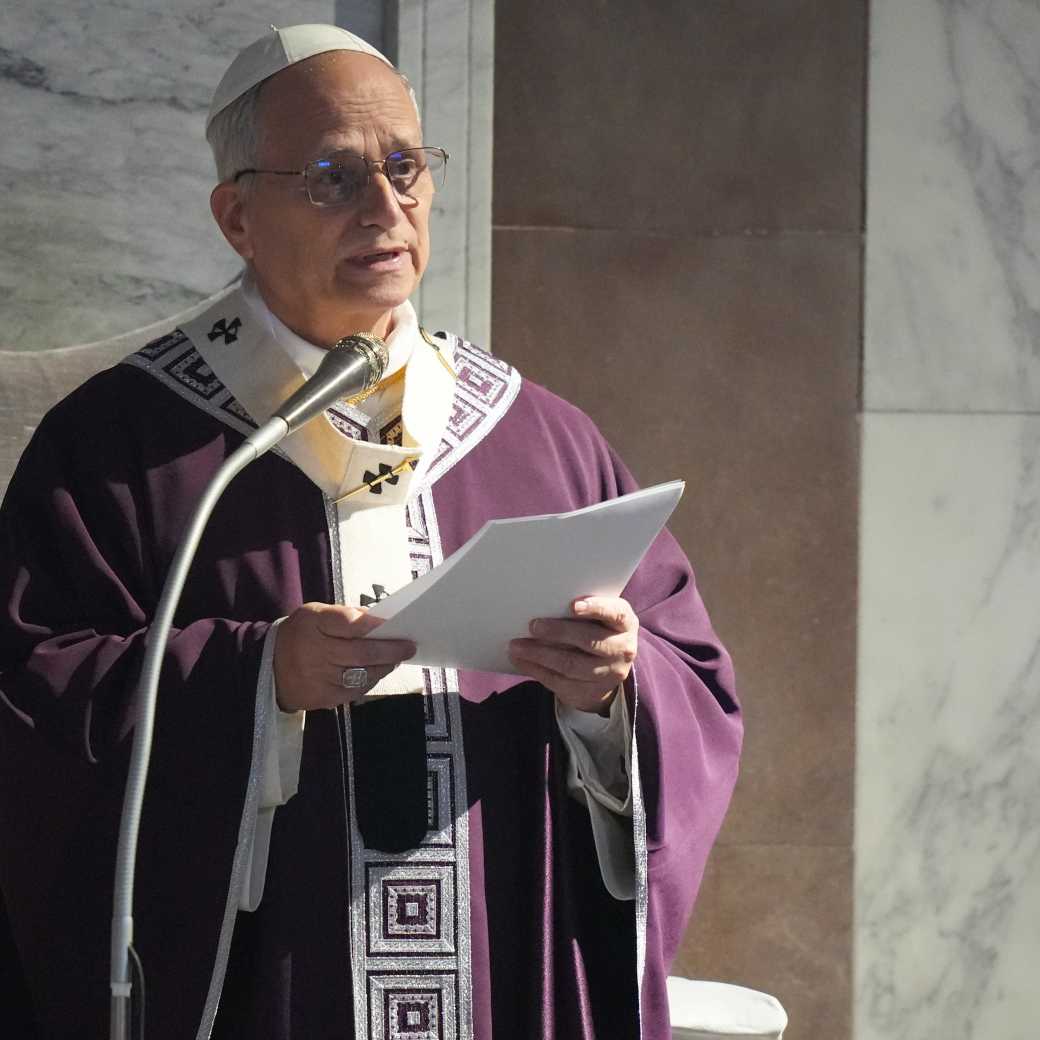
"How rare it is to find adults who repent -- individuals, businesses and institutions that admit they have done wrong!"
He said sacred Scripture teaches that opposing idolatry with "worship of the living God means daring to be free, and rediscovering freedom through an exodus, a journey, where we are no longer paralyzed, rigid or complacent in our positions, but gathered together to move and change."
The pope marked the beginning of Lent with the traditional Lenten procession on Rome's Aventine Hill.
The liturgy began with a brief prayer at the Church of St. Anselm, which is part of a Benedictine monastery. Chanting the litany of saints, cardinals, joined by Benedictine and Dominican religious, then processed to the Basilica of Santa Sabina -- considered the mother church of the Dominican order -- for Mass.
In his homily, Pope Leo said many young people are open to what Ash Wednesday offers: the possibility of repentance.
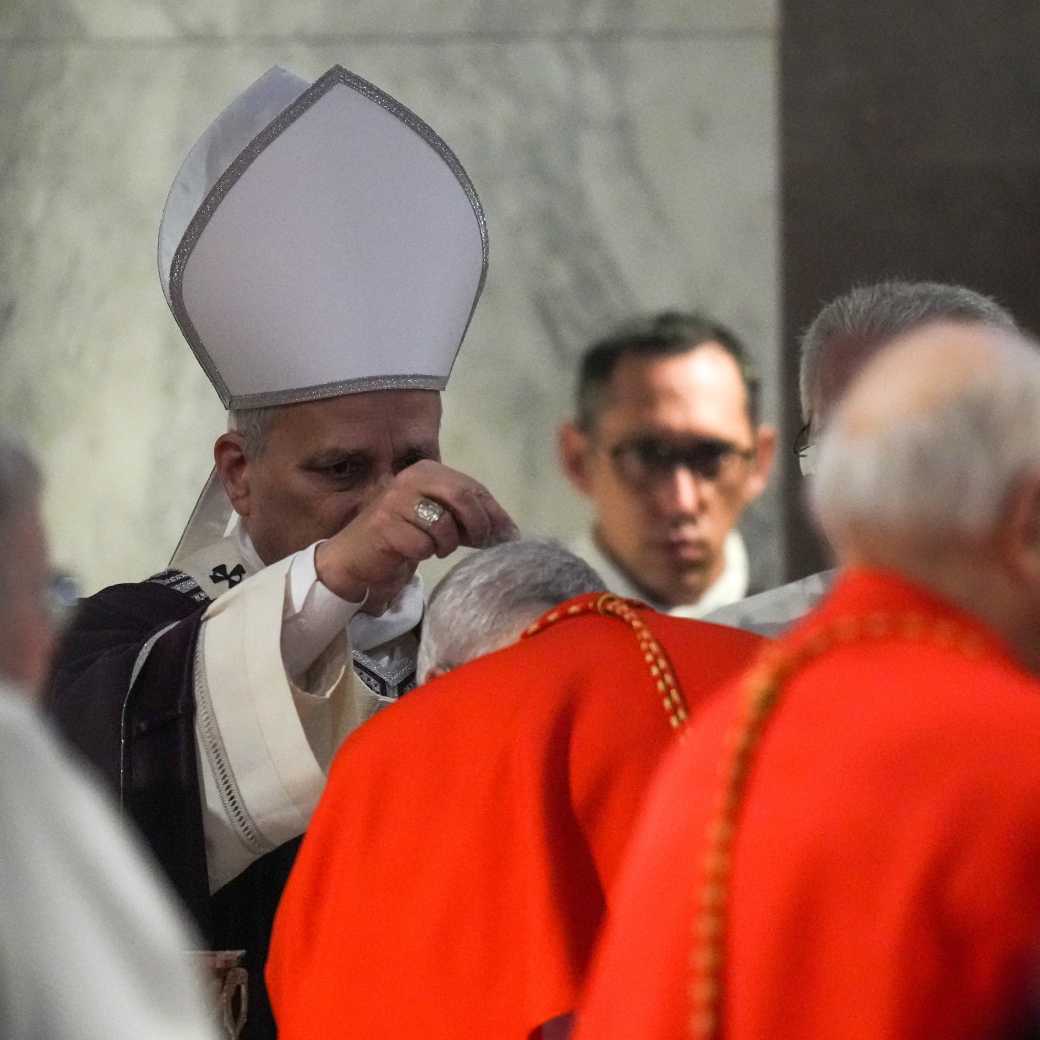
"Young people especially understand clearly that it is possible to live a just lifestyle, and that there should be accountability for wrongdoings in the Church and in the world."
The pope asked Catholics to "embrace the missionary significance of Lent" by introducing this season "to the many restless people of goodwill who are seeking authentic ways to renew their lives, within the context of the Kingdom of God and his justice."
Lent is about conversion -- a change of direction -- that makes "our proclamation more credible," he said.
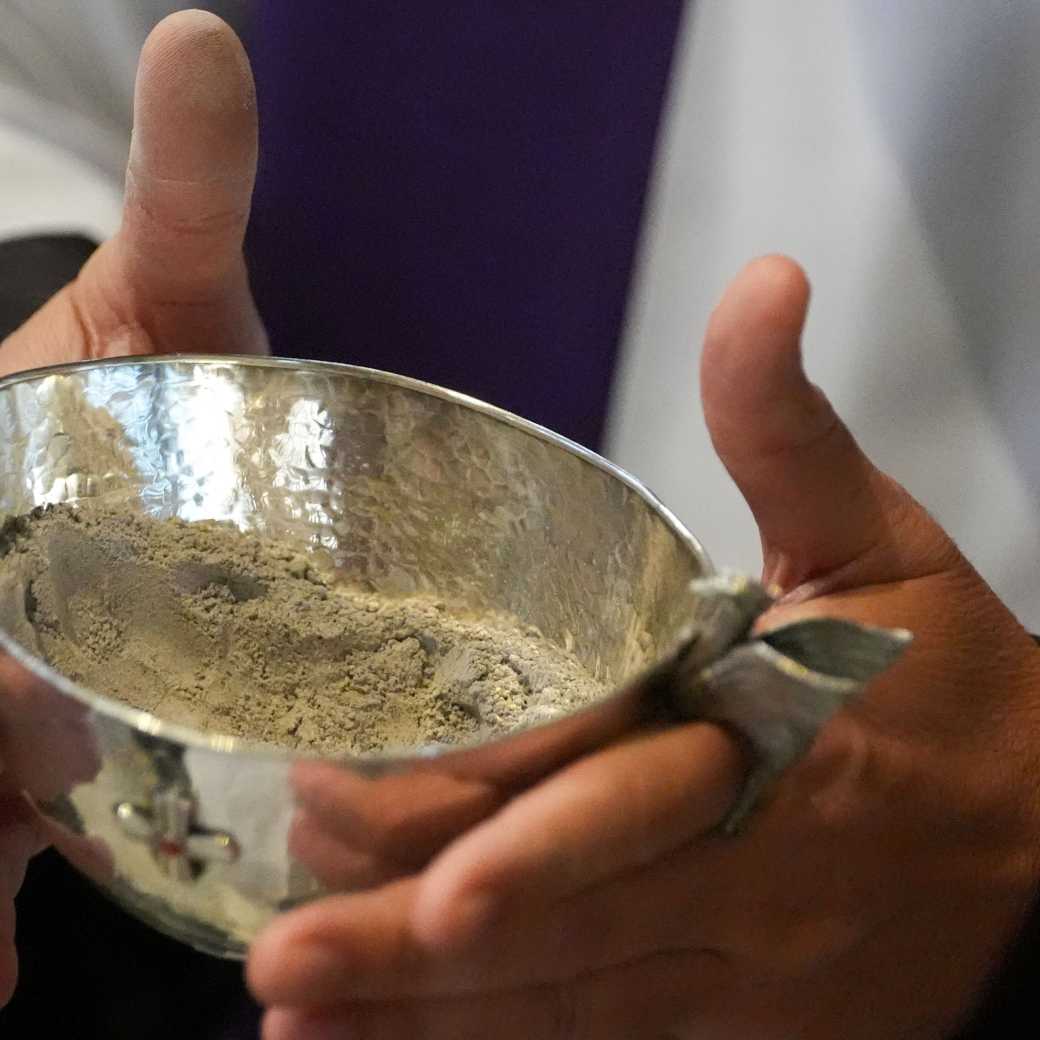
"We recognize our sins so that we can be converted; this is itself a sign and testimony of Resurrection. Indeed, it means that we will not remain among the ashes, but will rise up and rebuild."
It marked the first time since 2020 that a pope has walked the procession, which had been interrupted by the COVID-19 pandemic, but then Pope Francis' bad knee and ill health prevented him from walking the short journey in subsequent years. Pope Francis marked his last Ash Wednesday March 5, 2025, from Rome's Gemelli hospital.
Pope Leo's complete homily can be found in English and in Spanish.
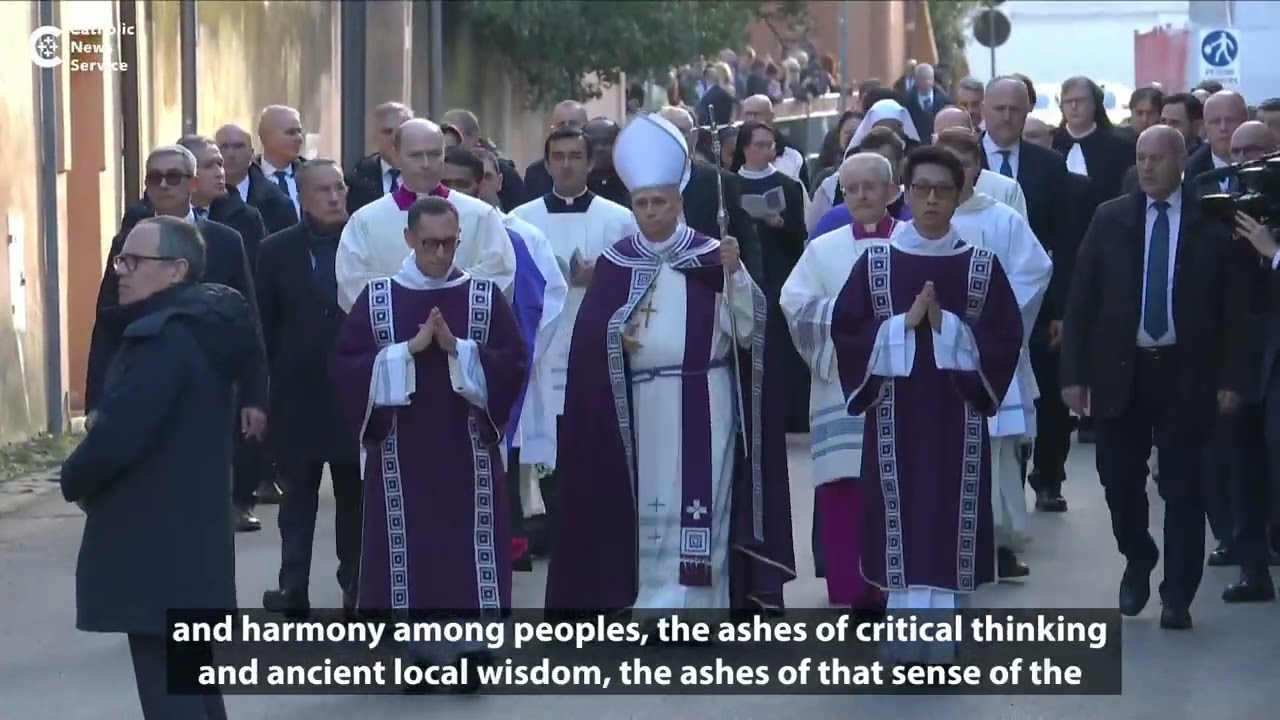
Pope Leo receives ashes, marking start of Lent
A look at Pope Leo's Ash Wednesday 2026. (CNS video/Robert Duncan)
The Church is proof of God's plan to unite humanity, pope says
Posted on 02/18/2026 08:30 AM (USCCB News Releases)
VATICAN CITY (CNS) -- The Catholic Church is not merely an institution, but a visible sign of God’s plan to unite all humanity in Christ through the power of the Holy Spirit, Pope Leo XIV said in his weekly general audience.
The pope continued his series on the Second Vatican Council, emphasizing one of its principal documents, the Dogmatic Constitution on the Church, "Lumen Gentium," which states that the Church is "in Christ like a sacrament," and therefore both are a "closely knit union with God and of the unity of the whole human race."
"It is through the Church that God achieves the aim of bringing people to him and uniting them with one another," he said Feb. 18 in Italian. "Union with God finds its reflection in the union of human beings."
Pope Leo said that this document refers to the Church as a "mystery," not because it is incomprehensible, but rather because what was previously hidden "is now revealed."
"Church is an expression of what God wants to accomplish in the history of humanity; therefore, by looking at the Church, we can to some extent grasp God’s plan, the mystery," he said.
The pope said humanity is naturally fragmented, but Jesus broke down the wall that separates people, and the Church was established through his sacrifice.
"Sitting at the right hand of the Father, he is continually active in the world that he might lead men to the Church and through it join them to himself and that he might make them partakers of his glorious life by nourishing them with his own body and blood," Pope Leo said.
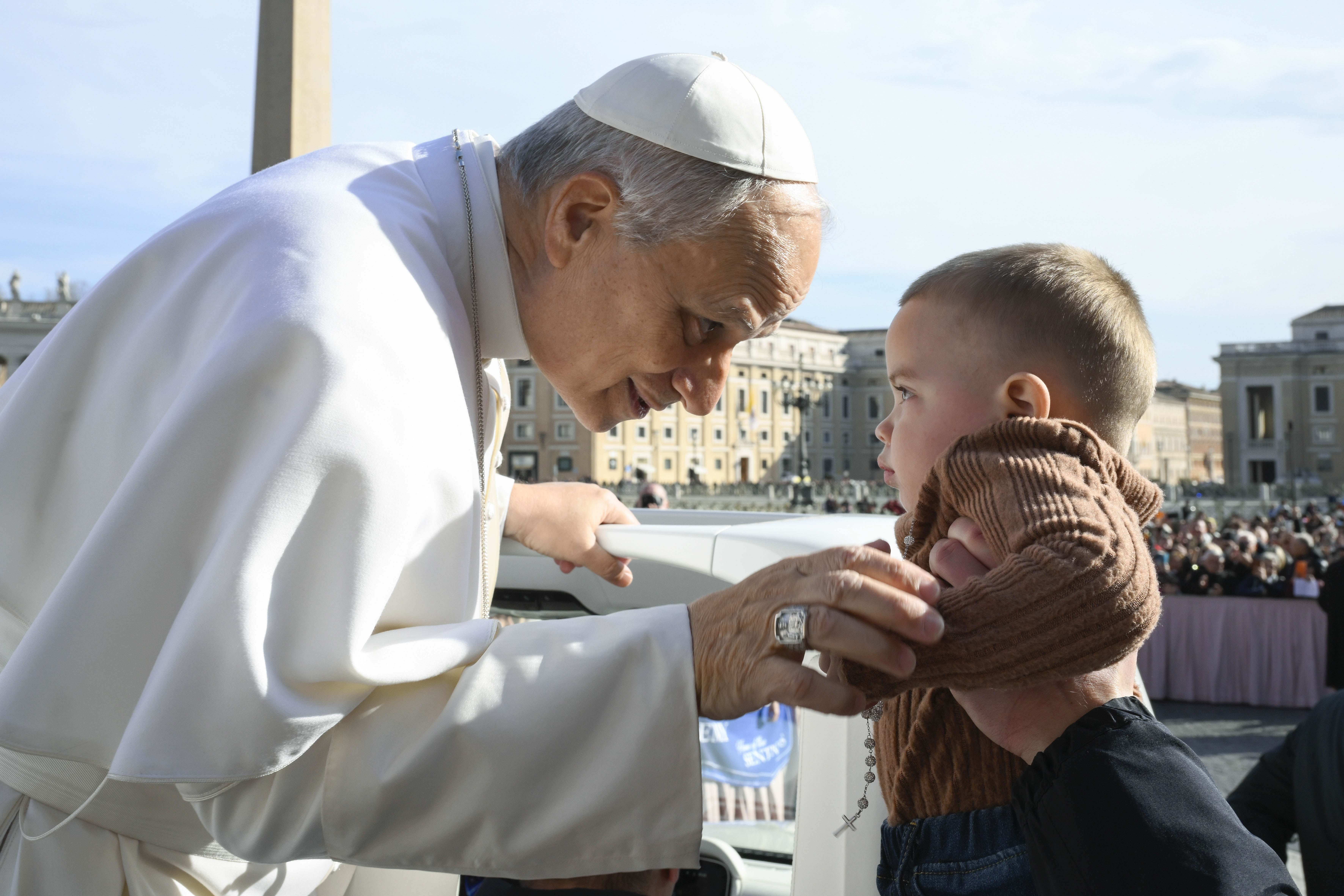
With Rome's temperatures slowly rising, Pope Leo returned to holding the general audience in St. Peter's Square, waving at visitors, kissing and blessing babies as he rode in the popemobile on Ash Wednesday. At the end of his general audience, the pope addressed the beginning of the 40-day Lenten season in his greetings to English-speakers.
"As we begin our Lenten journey today, let us ask the Lord to grant us the gift of true conversion of heart so that we may better respond to his love for us and share that love with those around us," he said.
Religious Liberty Report Aims to Help Catholics Bring the Spirit of the Gospel to Public Life
Posted on 02/17/2026 08:30 AM (USCCB News Releases)
WASHINGTON—The Committee for Religious Liberty of the U.S. Conference of Catholic Bishops (USCCB) has issued its annual report on the state of religious freedom in the United States. The report summarizes developments on national questions and federal policies affecting religious liberty in the U.S., including the role of religion in American public life, and the challenges and opportunities of the present moment.
The report identified six areas of critical concern for religious liberty in 2026:
- Political and anti-religious violence
- Unjust terms and conditions on federal grants, and unreliability of government
- Access to sacraments for ICE detainees and immigration enforcement at houses of worship
- School choice and the Federal Scholarship Tax Credit
- Repeal of provisions that prevent religious organizations from participating in government programs
- Further repudiation of gender ideology
“All of these developments in religious liberty are taking place as Americans prepare to celebrate two hundred fifty years as in independent nation,” said Archbishop Alexander K. Sample, chairman of the Committee for Religious Liberty in his introduction of the report. “It is a fitting time to reflect on the ideals expressed in the Declaration of Independence, and how those ideals have shaped the unique culture that has grown over the past two-and-a-half centuries.”
In highlighting the critical areas of concern, the report provides the Catholic faithful an opportunity to reflect on how the Church has enriched American life, he added, and cited the bishops’ consecration of the nation to the Sacred Heart of Jesus in June. “When we consecrate our nation to the Sacred Heart and enthrone the Sacred Heart in our homes, we recognize the kingship of Christ and offer our own lives in service to God and our neighbors,” said Archbishop Sample.
The report is available at: www.usccb.org/religious-liberty/2026-annual-report.
###
From Foreheads to Crowns: How Ash Wednesday looks different worldwide
Posted on 02/17/2026 08:30 AM (USCCB News Releases)
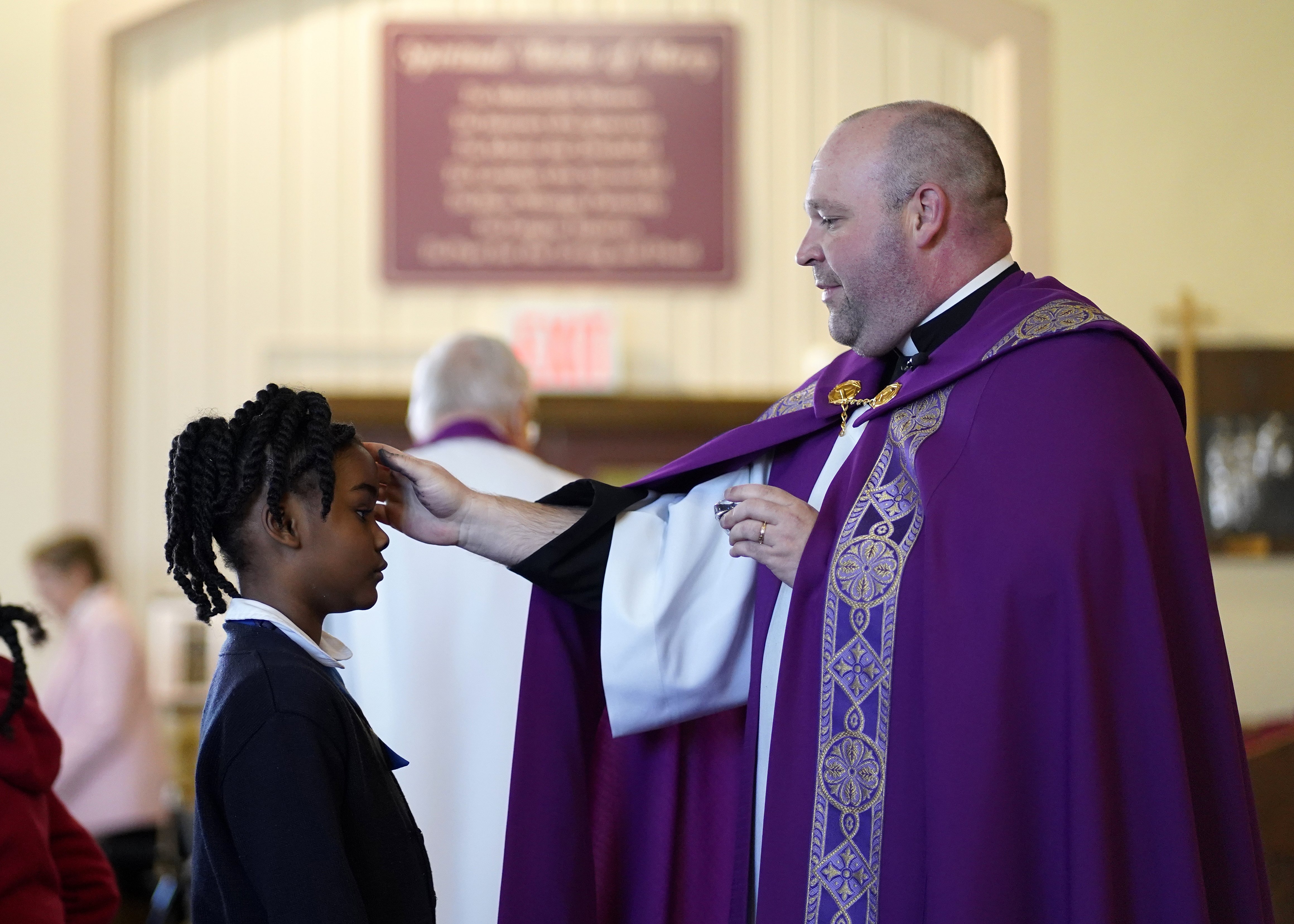
VATICAN CITY (CNS) -- Catholics going to Mass on Ash Wednesday will leave church marked, but whether the ashes appear as a bold cross on the forehead or sprinkled atop the head depends largely on where in the world they worship.
While Catholics in the United States typically receive a visible cross of ashes traced on their foreheads, that is not the universal practice across the Catholic Church. In many parts of the world -- particularly in Italy -- ashes are instead sprinkled lightly on the top of the head.
Benedictine Father Eusebius Martis, a professor at the Pontifical Athenaeum of St. Anselm in Rome, told Catholic News Service Feb. 11 both forms are approved by the Church and that there is no text explicitly outlining how ashes are to be received beyond, "the imposition of ashes."
Father Martis, a monk from the suburbs of Chicago who has lived in Rome for two years, personally prefers the sprinkling of ashes on top of the head. He said he feels it is more in line with the typical Gospel reading from Matthew, saying that the three pillars of Lent: prayer, fasting and almsgiving should be practiced quietly and sincerely, not for public recognition.
"Because it's invisible, the person that's receiving it is under this cloud, literally, under this cloud of ashes, and so it's really a gesture of humility," he told CNS.
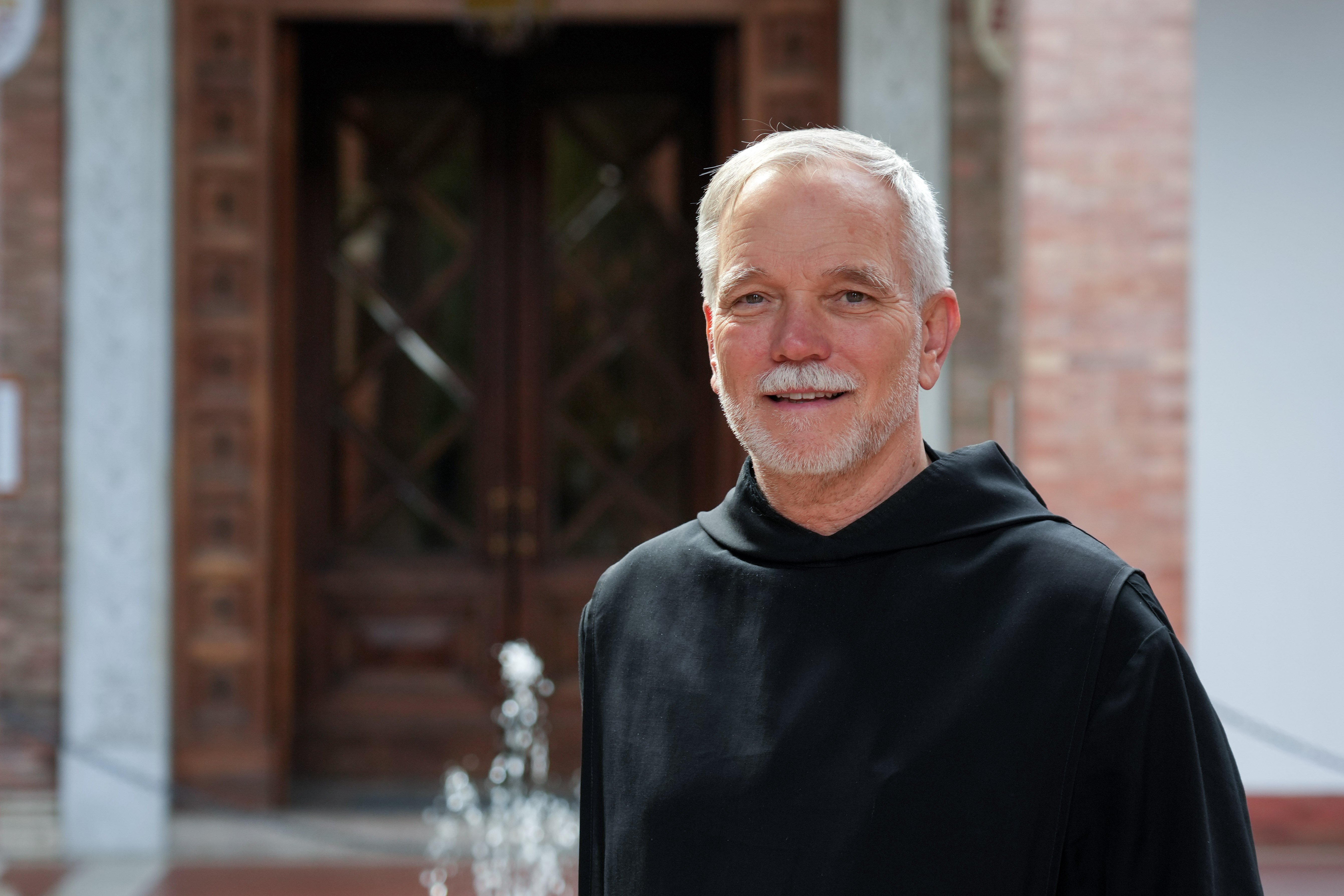
Still, Father Martis acknowledged that the more visible U.S. custom can carry spiritual value. The cross traced on the forehead echoes the sign first made at baptism and repeated throughout a Catholic’s sacramental life, he said.
"The cross on the forehead is a sign of belonging, right?" he said.
The ashes, made by burning the palm fronds from the previous year’s Palm Sunday, are given alongside the following words, "Remember that you are dust, and to dust you shall return," or "Repent, and believe in the Gospel." The gesture marks the beginning of the Lenten season of prayer, fasting and almsgiving in preparation for Easter.
Traditions on Ash Wednesday have evolved over centuries, and some have theories about how these practices came to be. Benedictine Father Kurt Belsole, coordinator of liturgy at the Pontifical North American College in Rome, said that by the 11th century there was already a distinction in how ashes were received.
"It was universally accepted that men received ashes on their heads and women received them on their foreheads," Father Belsole said in an email. "I suspect that it was so that the ashes would actually touch the body or skin, since men did not wear hats in church, but women wore veils or head coverings."
Today in Italy, both men and women typically receive ashes sprinkled on the crown of the head. Following Italian custom, popes have historically celebrated Ash Wednesday by sprinkling ashes atop heads.
Even the observance of Ash Wednesday itself is not identical everywhere. In parts of the Archdiocese of Milan, churches that follow the Ambrosian rite -- the liturgical tradition particular to Milan -- do not celebrate Ash Wednesday. Instead, Lent begins the following Sunday, reflecting a local tradition that began in the fourth century.
Despite these regional traditions and differences in receiving ashes, Father Martis said the spiritual focus of the Lenten season does not change.
"It's an expression of humility, which is what I think the faithful should be thinking about when they receive it," he said.
Pope Leo XIV advised Catholics to use the 40 days of Lent as a time for listening, fasting and community, leading to a greater attentiveness to God.
"Lent is a time in which the Church, guided by a sense of maternal care, invites us to place the mystery of God back in the center of our lives, in order to find renewal in our faith and keep our hearts from being consumed by the anxieties and distractions of daily life," he said Feb. 13 in his written message for Lent.
Father Martis agreed, saying that Lent is about prayer and almsgiving, but he also cautioned against reducing the season to temporary self-improvement or trendy abstinence.
"You tell me how giving up chocolate for Lent is going to make you a better person, or how going through dry January makes you a better person if you’re just going to get drunk on February 1st," he said. "That’s not the Church’s understanding of sacrifice."
Instead, he said, Lenten sacrifices are meant to draw believers into a deeper relationship with God.
"The sacrifices we make are supposed to be about giving our hearts entirely to God," Father Martis said. "God wants from us the only thing he cannot take, and that’s our love. So in the end, the best thing that we can do is just pour out our heart to God."
Correction: A previous version of this story misstated the source of a quote by Pope Leo XIV. It is from his written Lenten message published Feb. 13, not his Angelus address Feb. 15. This article was updated Feb. 18.
A true parish welcomes everyone, spreads respect, harmony, pope says
Posted on 02/16/2026 08:30 AM (USCCB News Releases)
OSTIA LIDO, Italy (CNS) -- An authentic Christian community knows how to sincerely and joyfully welcome everyone: Catholics, non-Catholics and people of no faith at all, Pope Leo XIV said.
"A true parish" is where "we all learn to say 'Welcome,' not only with words, but with a spirit of hospitality, opening the door and welcoming everyone," he said, speaking to members of the community during his first visit to a parish in his Diocese of Rome.
The pope also celebrated Mass during which he encouraged the faithful to cultivate humble and peaceful hearts that are open to Christ, because "the evil we see in the world has its roots precisely there, where the heart becomes cold, hard and lacking in mercy."
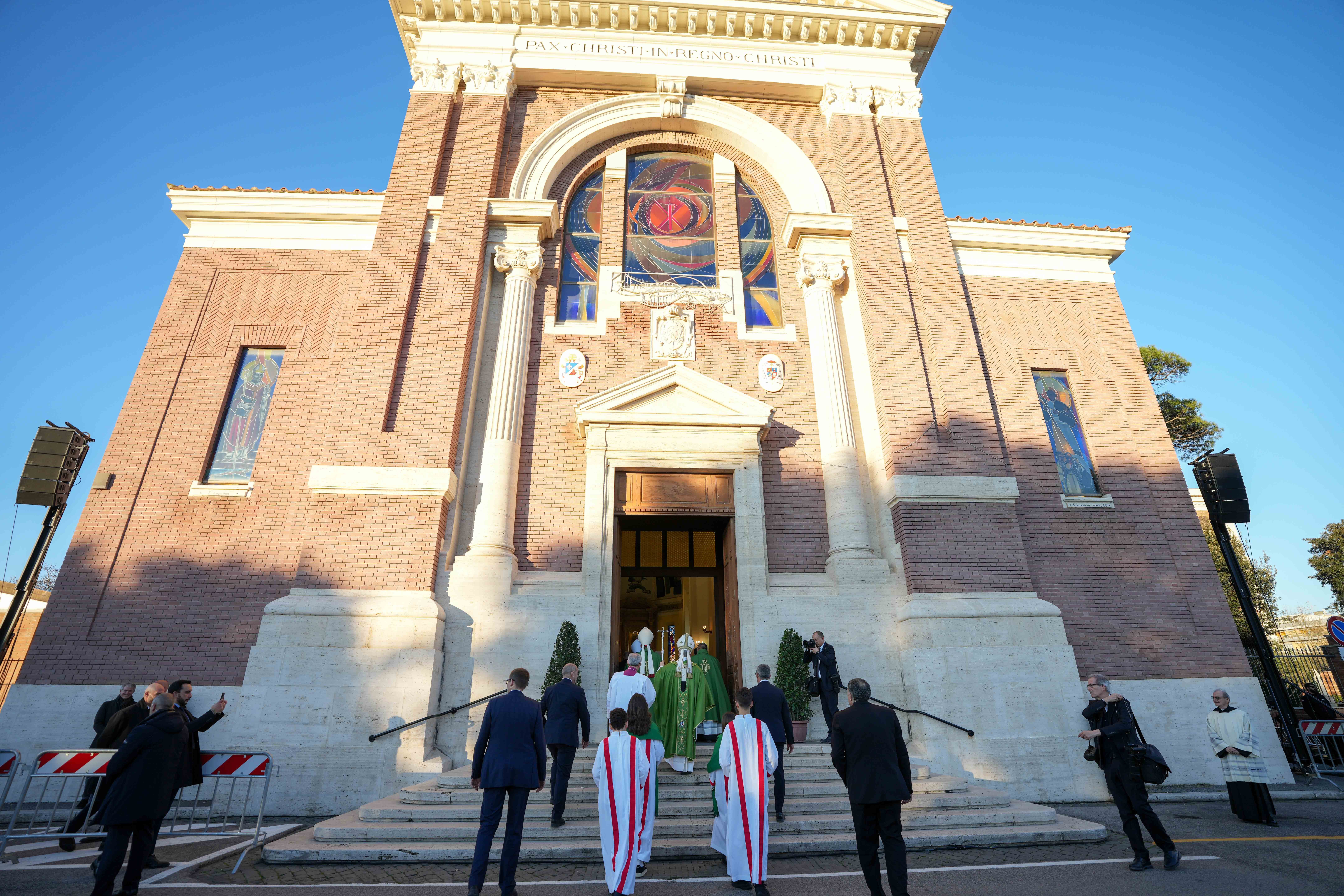
The pope's early evening visit Feb. 15 was to the Roman parish of Santa Maria Regina Pacis in Ostia Lido -- a seaside community 16 miles southwest of Rome.
Although it was his first visit to Ostia as pope, he had been to the area many times as an Augustinian friar because of the port town's close connection to the story of St. Augustine and, especially, his mother, St. Monica, who died there in 387; her remains were moved to Rome in the 15th century.
Pope Leo emphasized the need to convert one's heart for there to be peace in the world, in his homily during Mass inside the large 20th-century church of Santa Maria Regina Pacis.
The path to human fulfillment is fidelity to God based on respect and care for others, he said. But that has to be "cultivated first and foremost in the heart, even before in gestures and words."
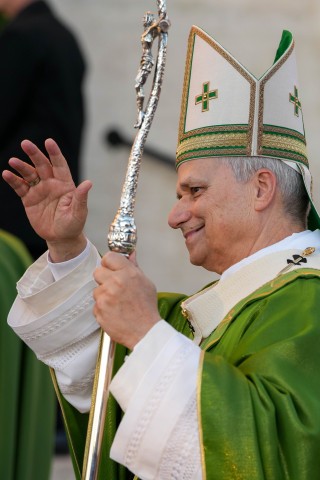
The heart is home to noble feelings and "painful profanations: closed-mindedness, envy, jealousy," he said. "Those who think badly of their brother, harboring evil feelings toward him, are as if they were already killing him in their hearts."
He recalled some of the difficulties facing residents in Ostia, including violence, substance abuse and criminal organizations.
He encouraged the parish community to continue its courageous efforts with other organizations "to spread the good seed of the Gospel in your streets and in your homes."
"Do not resign yourselves to the culture of abuse and injustice. On the contrary, spread respect and harmony, beginning by disarming language and then investing energy and resources in education, especially for children and young people," he said.
"Unfortunately, even today, many clouds still darken the world, with the spread of ideas contrary to the Gospel, which exalt the supremacy of the strongest, encourage arrogance, and fuel the seduction of victory at all costs, deaf to the cries of those who suffer and those who are defenseless," the pope said.
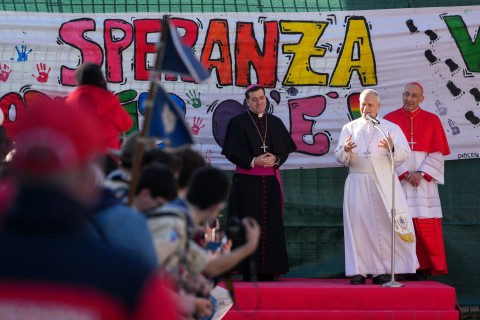
"Let us oppose this tendency with the disarming power of meekness, continuing to ask for peace, and to welcome and cultivate its gift with tenacity and humility," he said.
Pope Leo began the visit by greeting young people and families gathered behind the church. A clutch of gold mylar balloons -- depicting a smiling lion and the numbers "one" and "four" -- bopped and twisted in the strong breeze coming in off the Mediterranean Sea.
"You are the hope! And you must recognize that in your hearts, in your lives, in your youth, there is hope for today and tomorrow. Hope already begins here, because Jesus walks with us," he told the small enthusiastic crowd outside.
Inside a nearby gym, home of the local "Starfish" basketball team, the pope thanked the community for their warm welcome. "This is one of the many signs of an authentic Christian community, of a true parish," he said, emphasizing the need to receive "anyone who comes: Catholic, non-Catholic, believer, non-believer."
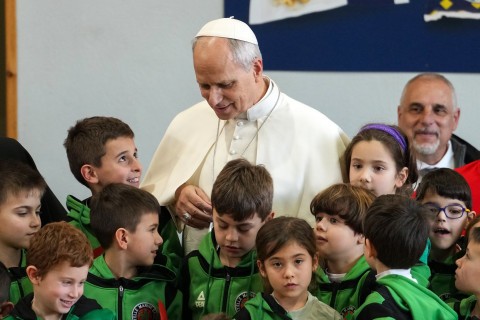
Speaking to the young people, the elderly, people with disabilities, Caritas volunteers and the people they serve, the pope told those gathered that "Everyone is part of this parish family, and everyone has something to say, something to give, something to share."
"May you have the courage to say 'yes' to the Lord!" he said. "Each person's life has great value: whether I am young, whether I am old, whether I have difficulties or not, human life is a gift from God."
Speaking to members of the parish's pastoral council, the pope thanked them for generously offering their time and talent, helping the local clergy, church and faithful. However, "I also encourage you to go out and seek others."
"Do not remain inside the church and say, 'It's OK, those who come are enough.' It is never enough. Invite, welcome, accompany," Pope Leo said.
Pope Leo XIV Accepts Resignation of Bishop Patrick Zurek of Amarillo and Appoints Cardinal Daniel DiNardo as Apostolic Administrator
Posted on 02/14/2026 08:30 AM (USCCB News Releases)
WASHINGTON - Pope Leo XIV has accepted the resignation of the Most Reverend Patrick J. Zurek, 77, from the Office of Bishop of Amarillo. At the same time, he has appointed His Eminence Cardinal Daniel N. DiNardo, archbishop emeritus of Galveston-Houston, as the Apostolic Administrator of the Diocese of Amarillo to serve until the appointment and installation of the new bishop.
The resignation and appointment were publicized in Washington, D.C. on February 14, 2026, by Cardinal Christophe Pierre, apostolic nuncio to the United States.
The Diocese of Amarillo is comprised of 25,800 square miles in the State of Texas.
###
Pope invites Catholics to 'disarm' language and build kindness, respect for Lent
Posted on 02/13/2026 08:30 AM (USCCB News Releases)
VATICAN CITY (CNS) -- The Vatican released Pope Leo XIV's message for Lent, which begins Feb. 18 on Ash Wednesday.
Titled, "Listening and Fasting: Lent as a Time of Conversion," the papal message asked Catholics to come together as a community to listen to the word of God and to the vulnerable.
The pope also invited the faithful to engage in a "very practical and frequently unappreciated form of abstinence: that of refraining from words that offend and hurt our neighbor."
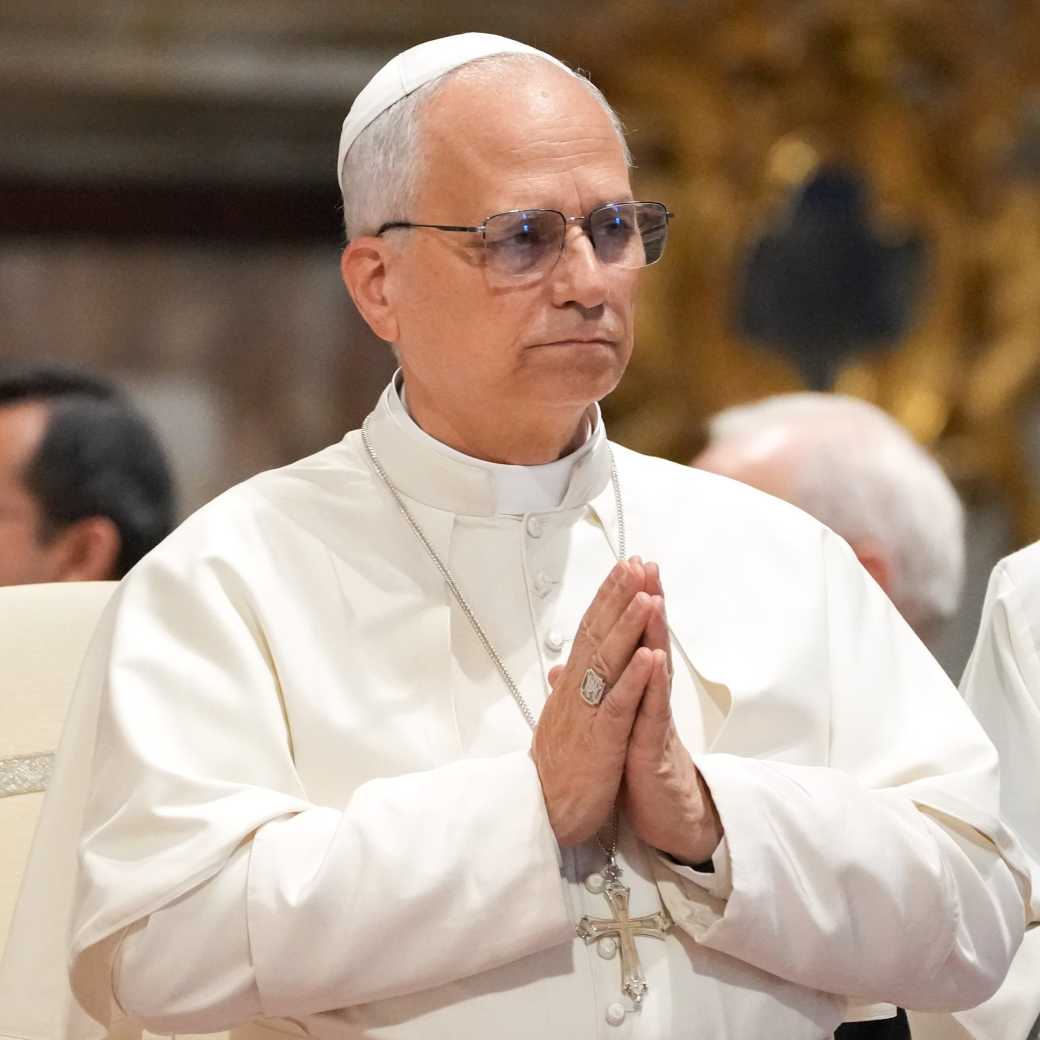
"Let us begin by disarming our language, avoiding harsh words and rash judgment, refraining from slander and speaking ill of those who are not present and cannot defend themselves."
Instead, he asked, "let us strive to measure our words and cultivate kindness and respect in our families, among our friends, at work, on social media, in political debates, in the media and in Christian communities. In this way, words of hatred will give way to words of hope and peace."
Lent is a time to "place the mystery of God back in the center of our lives, in order to find renewal in our faith and keep our hearts from being consumed by the anxieties and distractions of daily life," the pope wrote.
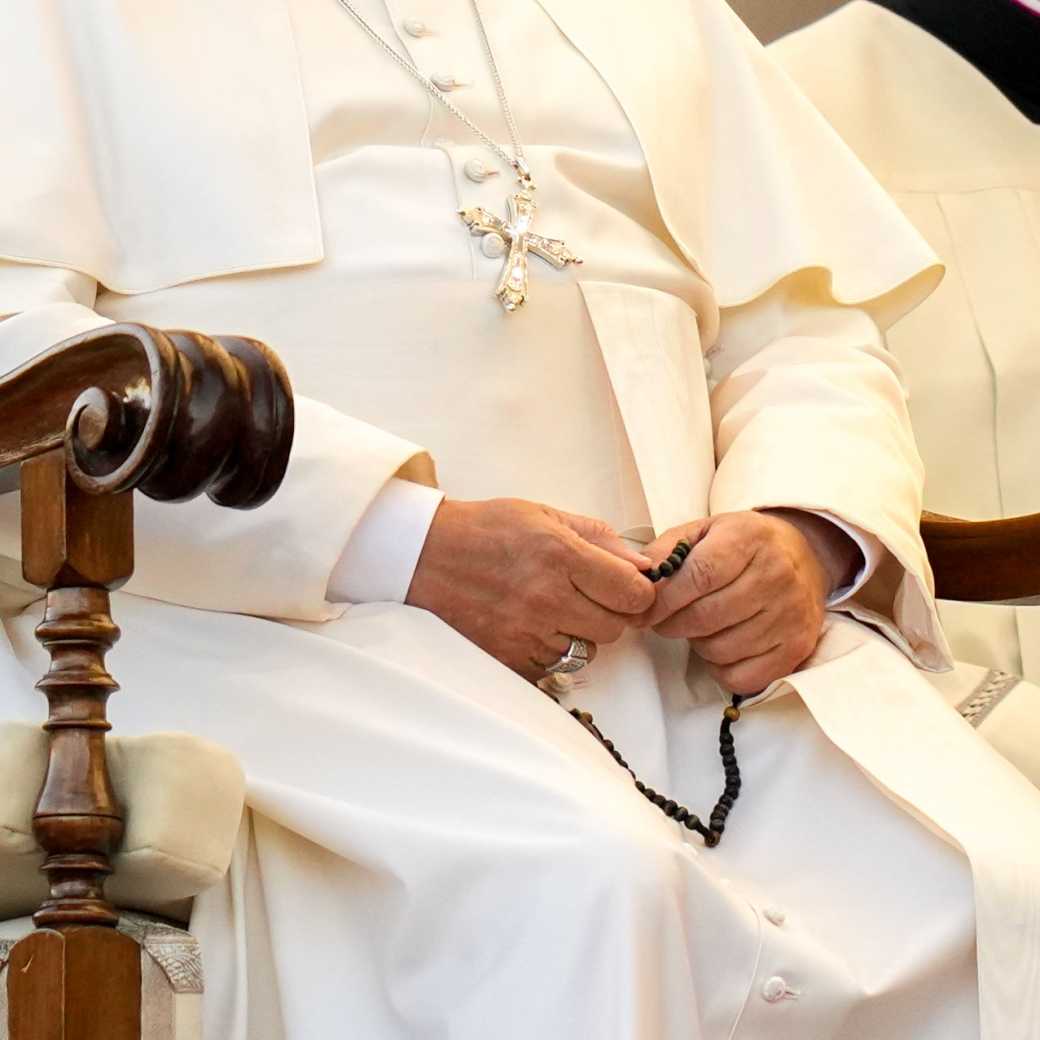
"Let us strive to make our communities places where the cry of those who suffer finds welcome, and listening opens paths towards liberation, making us ready and eager to contribute to building a civilization of love."
The pope's full message can be found in English and in Spanish.
Pope supports solidarity with immigrants in US, Catholics must stand together, archbishop says
Posted on 02/12/2026 08:30 AM (USCCB News Releases)
VATICAN CITY (CNS) -- All Catholics are called to stand together by reaching out to their brothers and sisters in the faith of all ethnicities, especially those of Hispanic heritage, Archbishop Alexander K. Sample of Portland, Oregon, said.
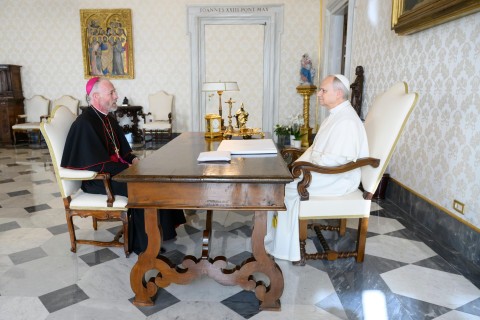
"They are our brothers and sisters, we love them, and we stand with them in these difficult times," he told Catholic News Service Feb. 11 during a visit to Rome and the Vatican, which included a private meeting with Pope Leo XIV Feb. 9.
"Our Holy Father has been a great source of encouragement and support for the United States bishops, I think, to be very strong in our statements and in our support for the immigrant community back home," he said. "Our Holy Father feels very strongly about this."
"I had the opportunity to speak with him, and I can say in the conversation, you could see that this was a matter of great concern for him," said the archbishop whose archdiocese had seen sustained activity by Immigration and Customs Enforcement, known by its acronym ICE, in its communities, including near some parishes.
When it comes to immigration and religious liberty, one major concern is allowing the Catholic Church to provide the sacraments and pastoral care inside some detention facilities, he said; the archbishop is chair of the Committee for Religious Liberty of the USCCB.
"There have been some difficulties there in some places, and so we're keeping a very close eye on that to make sure that the religious rights of those in the detention centers are protected so that they can receive pastoral care and especially the sacraments from the church's ministers," he said.
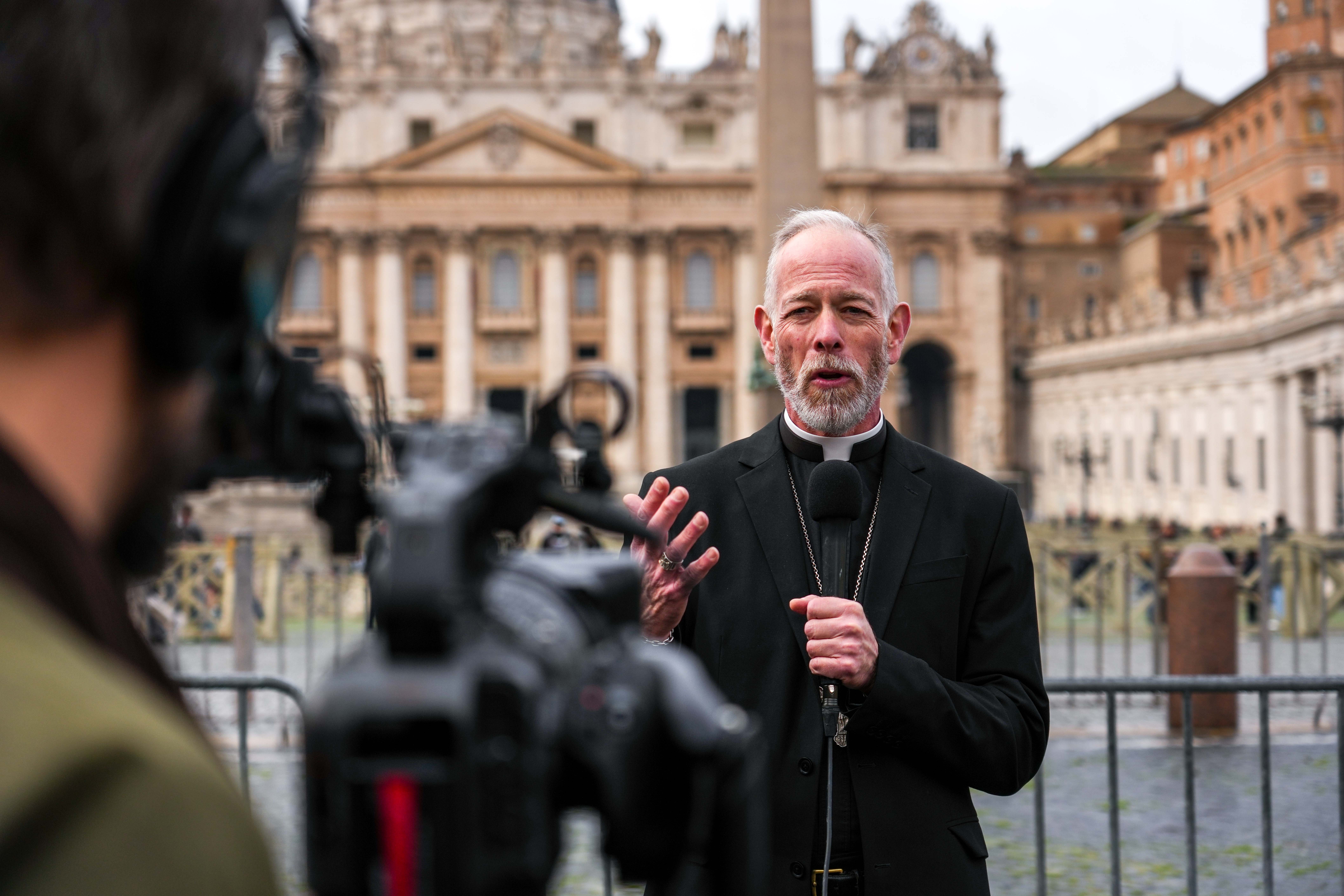
Archbishop Sample said what had him most worried was when ICE officials "began showing up outside of churches and places of worship" in his archdiocese, causing "a great deal of doubt and fear and anxiety among our people -- people afraid to go to Mass."
While ICE activity seemed to be less aggressive as of late, he said, "there has to be a better solution here to solving the immigration problem we have in the United States."
"We have a system that isn't working. But in terms of the folks that are already here, and especially when I think of the people in my own archdiocese who have been here sometimes for years and years and have established themselves, there has to be a more just, more humane, just a better way to go about this," he said.
When asked how Catholics in his archdiocese could best accompany those possibly at risk of arrest or detention, he encouraged the English-speaking community to reach out to and build a real connection with those in the Hispanic community.
"Sometimes it feels like maybe (there are) two communities worshiping in the same building," he said of English- and Spanish-speaking Catholics.
Launching a call for unity, peace and mutual support, the archbishop said Catholics of every ethnicity need to "see themselves as one and to really reach out to our brothers and sisters in the Hispanic community, especially right now … just get to know them, welcome them, help them, know that they are loved and very much a part of the body of Christ."
Portland has seen ongoing protests in response to ICE operations, particularly near its facility where people are detained and interviewed to determine their legal status as U.S. residents.
While ICE and other agencies are meant to stop and detain people suspected of being in the U.S. illegally, they have been accused of overly aggressive action and routinely going beyond what the law allows with entering homes, making arrests without judicial warrants and removing people believed to be unauthorized immigrants through mass deportations.
Pope Francis released a formal letter to U.S. bishops last February, addressing the "major crisis" taking place and criticizing efforts to equate the illegal status of some migrants with criminality.
While every nation has the right to defend itself and to keep communities safe from those who have committed violent or serious crimes, the late pope wrote, mass deportations harm human dignity and families. "An authentic rule of law is verified precisely in the dignified treatment that all people deserve, especially the poorest and most marginalized."
Archbishop Sample also released his own statement in November, reacting to increased ICE activity in Portland. That came just a few days before the U.S. bishops as a whole released a special message Nov. 12 underlining that "human dignity and national security are not in conflict. Both are possible if people of goodwill work together."
Pope Leo supported the U.S. bishops' message, telling reporters Nov. 13, "If someone is in the United States illegally, there are ways to address this. There are courts. There is a judicial system."
"I believe there are many problems in the system. No one has said that the United States should have open borders," he said, adding, "I think every country has the right to determine who enters, how, and when."
However, the U.S. pope said, "when people have lived good lives -- many of them for 10, 15, 20 years -- treating them in a way that is, to say the least, extremely disrespectful, and with instances of violence, is troubling."
Pope Leo invited all Catholics and people of goodwill to "listen carefully" to the bishops' message. "I believe we must seek ways of treating people with humanity, with the dignity that is theirs."
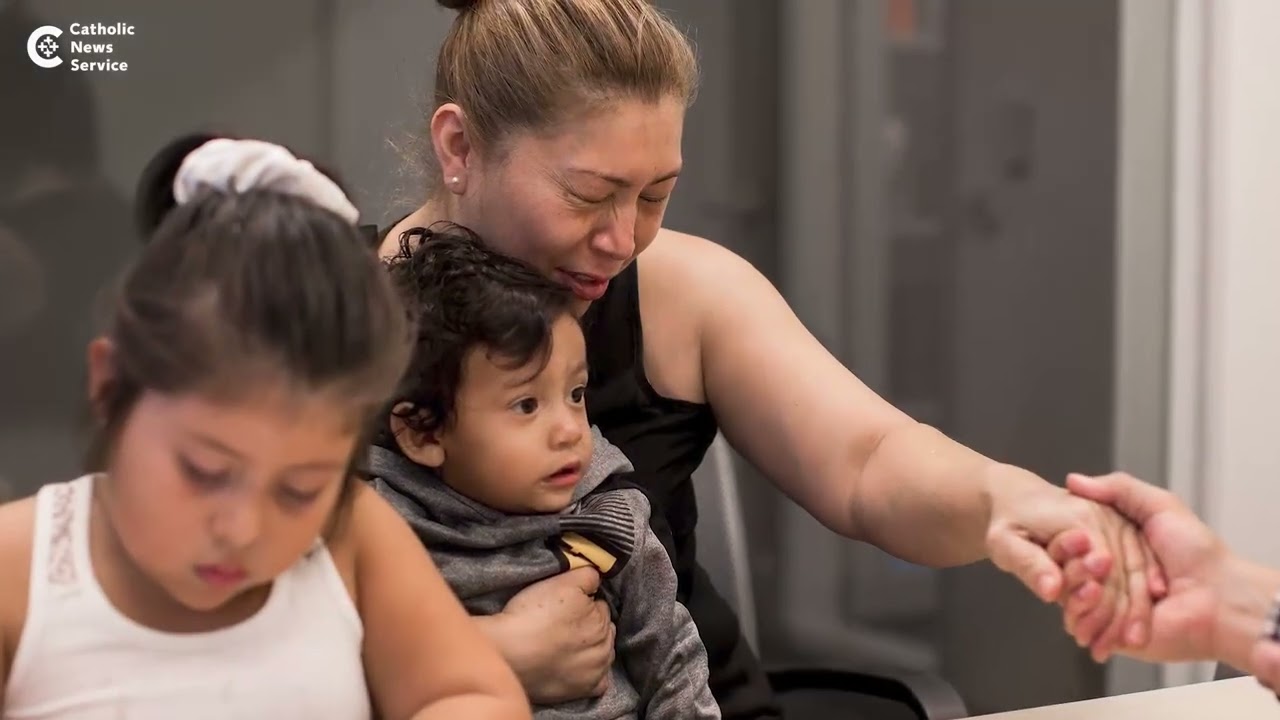
U.S. archbishop on ICE and religious liberty
Archbishop Alexander K. Sample of Portland talks to CNS about ICE and religious liberty.
In a world of empty words, sacred Scripture offers nourishment, healing, pope says
Posted on 02/11/2026 08:30 AM (USCCB News Releases)
VATICAN CITY (CNS) -- Ignorance of sacred Scriptures is ignorance of Jesus Christ, Pope Leo XIV said during his weekly general audience.
"The ultimate purpose of reading and meditating on the Scriptures," he said Feb. 11, is "to get to know Christ and, through Him, to enter into a relationship with God, a relationship that can be understood as a conversation, a dialogue."
Also, with the season of Lent beginning in one week, Feb. 18, the pope said the season "is a time for deepening our knowledge and love of the Lord, for examining our hearts and our lives, as well as refocusing our gaze on Jesus and his love for us."
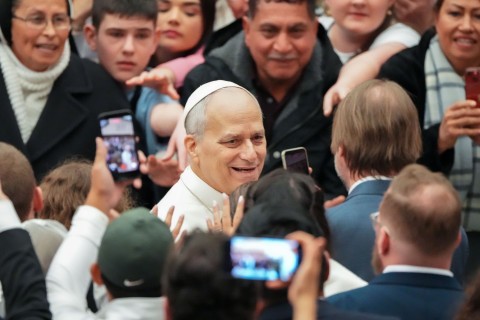
"May these coming days of prayer, fasting and almsgiving be a source of strength as we daily strive to take up our own crosses and follow Christ," he said during his audience in the Paul VI Audience Hall.
In his main catechesis, Pope Leo continued his series of talks on Vatican II, specifically the Dogmatic Constitution "Dei Verbum," on divine revelation and the Word of God.
The word of God is a source of comfort, guidance and strength for Christians, he said, and it should be shared with others, too, he said.
"Indeed, we live surrounded by so many words, but how many of these are empty!" he said.
"On the contrary, the Word of God responds to our thirst for meaning, for the truth about our life," he said. "It is the only Word that is always new: revealing the mystery of God to us, it is inexhaustible, it never ceases to offer its riches."
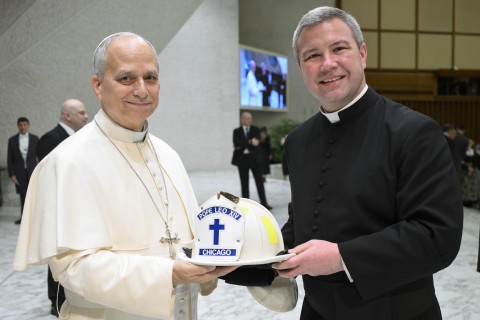
Sacred Scripture is "the means by which we come to know the incarnate living Word of God who is Jesus Christ," the pope said in his summary in English. "Indeed, praying with Scripture opens the door for an intimate relationship with God who, through these sacred writings, invites us into conversation with him."
"As St. Jerome rightly points out, ignorance of Scripture is ignorance of God," he said, encouraging all faithful to read and reflect on the word of God every day, so that it may "nourish our hearts and our minds and lead us to the fullness of life."
Speaking to Portuguese-speaking visitors, Pope Leo said prayerfully reading the word of God is a special kind of "nourishment" and an invigorating "medicine in moments of weakness"; from it, the faithful can draw "light and comfort."
"Christians are called to listen to the word of God, to keep it in their hearts, and to put it into practice in their daily lives, because it is alive, effective and a light on their path," he told Arabic-speaking visitors, which included members of the Sisters of Nazareth living in Haifa, Israel.
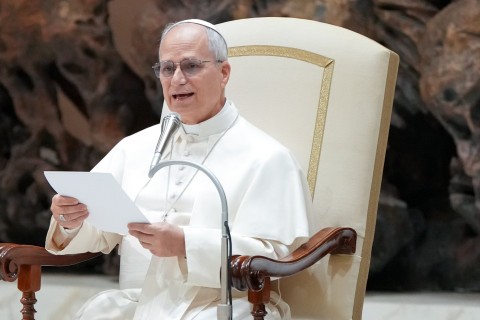
Pope Leo said in his English summary that there is a "profound and vital connection" between the word of God and the Catholic Church.
"Sacred Scripture, which has been entrusted to the Church and is guarded by her, reveals its meaning and manifests its strength in the life and faith of the Church, above all in the celebration of the Holy Eucharist," he said.
"For this reason, the Church continually meditates upon and interprets Scripture because it is the means by which we come to know the incarnate living Word of God who is Jesus Christ," he added.
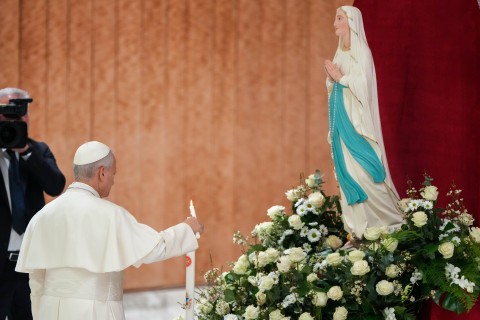
To mark the feast of Our Lady of Lourdes, celebrated Feb. 11, Pope Leo began the general audience with lighting a candle placed in front of a statue of Our Lady, and he joined in singing the "Immaculate Mary," also known as the Lourdes Hymn, with the thousands of faithful in the hall.
After the general audience, he visited the replica of the grotto at Lourdes in the Vatican Gardens and lit a candle there, too, "as a sign of my prayer for all the sick, whom we remember with particular affection today, World Day of the Sick."
Gathered together with a small group of people experiencing illness and those who care for them, the pope said, "We pray for you."
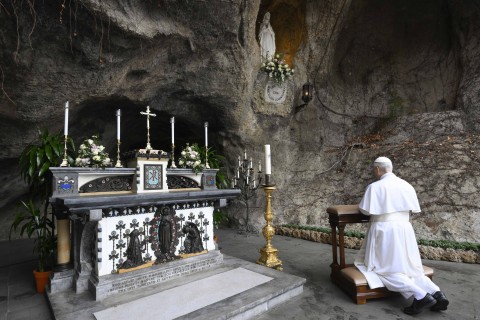
Thanking them for taking part in the moment of prayer, he said, the feast day "reminds us of the closeness of Mary, our mother, who always accompanies us and teaches us so much: what suffering means, what love means, what it means to entrust our lives into the hands of the Lord."
Pope Leo XIV Accepts Resignation of Archbishop Gregory Aymond of New Orleans; Succeeded by Coadjutor Archbishop James Checchio
Posted on 02/11/2026 08:30 AM (USCCB News Releases)
WASHINGTON – Pope Leo XIV has accepted the resignation of Most Reverend Gregory M. Aymond, 76, from the Office of Archbishop of New Orleans. On the same day, Coadjutor Archbishop James F. Checchio, will assume the pastoral governance of the archdiocese.
The announcement was publicized in Washington, D.C. on February 11, 2026, by Cardinal Christophe Pierre, apostolic nuncio to the United States.
Archbishop Checchio’ biography may be found here.
The Archdiocese of New Orleans is comprised of 4,208 square miles in the State of Louisiana.
###